Hawaii has always been a destination of intention. Long before flight schedules and cruise itineraries, voyagers crossed the Pacific guided only by wind, waves, and the night sky. This post explores how people have traveled to Hawaii across time. From the first Polynesian navigators to modern air and sea travel.
Prefer to watch or listen? Click the icons, or scroll to read.
Table of Contents
What is the fastest way to get to Hawaii?
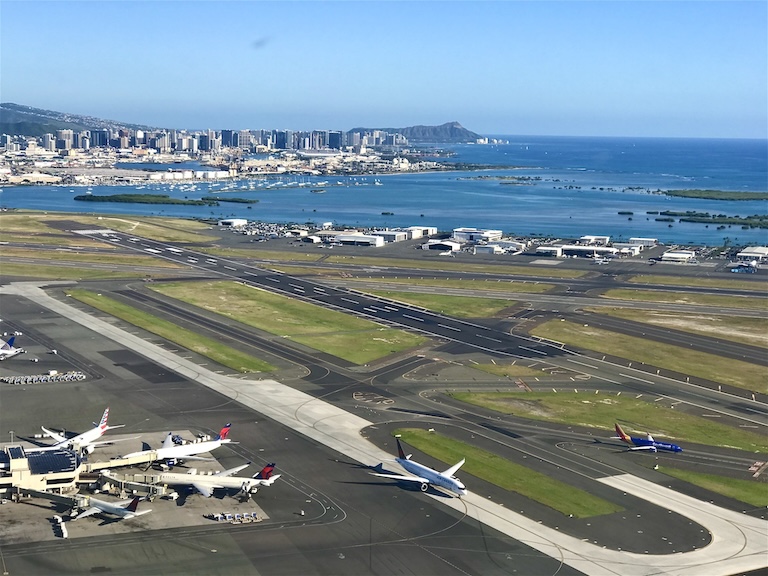
Direct flights from the U.S. mainland take about 6 hours, and from Asia, about 10 hours.
Can you cruise to Hawaii, and how long does it take?
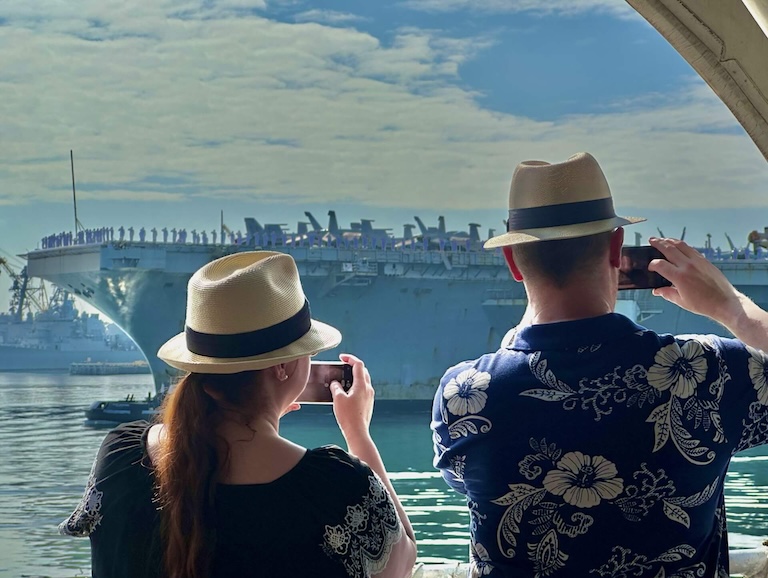
Yes! Cruises, like the Norwegian Pride of America, typically last less than a week.
Are there all-inclusive resorts in Hawaii?
Hawaii does not have true all-inclusive resorts. Visitors often combine flights or cruises with guided tours and accommodations.
What's the best way to travel between the islands?
Inter-island flights are usually the fastest and most convenient way to get around Oahu, Maui, Kauai, and the Big Island.
How has travel to Hawaii changed over time?
Travel evolved from Polynesian canoes and European explorers to steamships, airplanes, and modern cruises.
What should I know before planning a trip?
Book flights, cruises, and accommodations early, and consider guided tours for a full experience of Hawaii’s history, culture, and natural beauty.
Hawaii Travel at a Glance
To understand modern travel to the islands, we first need to understand the long journey that brought Hawaii into connection with the rest of the world.
Every way of reaching Hawaii carries its own story, shaped by the technology, values, and motivations of its time.
Origins before arrival in Hawaii
In the islands, we believe everything began in darkness, and life descended from the stars to start in the sea. From there, the islands were born. Long before canoes or jets crossed this ocean, the only way to arrive was wings, waves, and wind. Other than crawling onto land from the sea, of course.
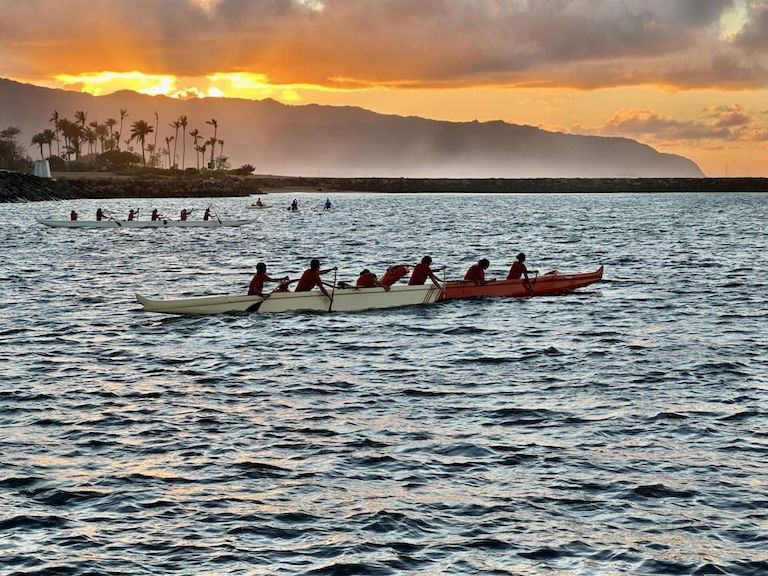
This belief comes from the Kumulipo, or Hawaiian Creation Chant, which is a genealogy (moʻokūʻauhau) of all living things.
The First Travelers: Polynesian Master Navigators
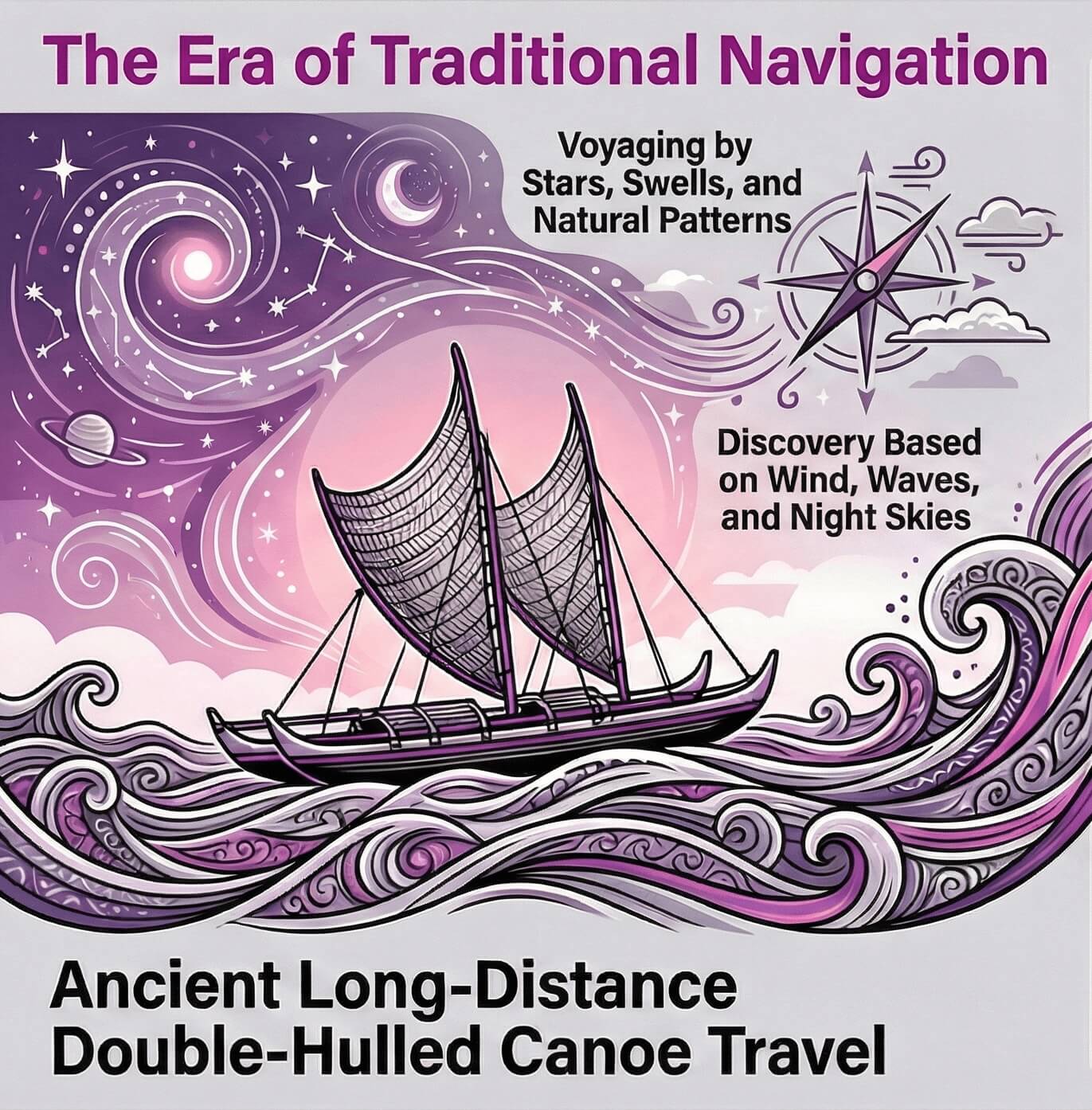
The Kumulipo also tells the stories of great Gods, Chiefs, and, of course, Polynesian Navigators. They traveled in double-hulled canoes across thousands of miles of (moana) open ocean.
Long before a sextant or a compass, and long before the rest of the World saw these coastlines, they mastered the natural patterns and clues provided.
Legendary oceanic voyages
Signs like stars, swells, clouds, and birds unlocked the entire Pacific.
| ✓ Origins in Taiwan – The journey started around Taiwan before expanding across the Pacific |
| ✓ Pacific Settlement – Settlement of nearly every large Pacific Island |
| ✓ Indian Ocean Reach – Evidence found as far as Madagascar and South Africa |
| ✓ Americas Arrival – Arrived on both American continents before the Vikings |
| ✓ Southern Exploration – Saw Antarctica roughly 1,000 years before Europeans |
| ✓ Complete Pacific Network – Settled virtually all inhabitable islands across the Pacific Ocean |
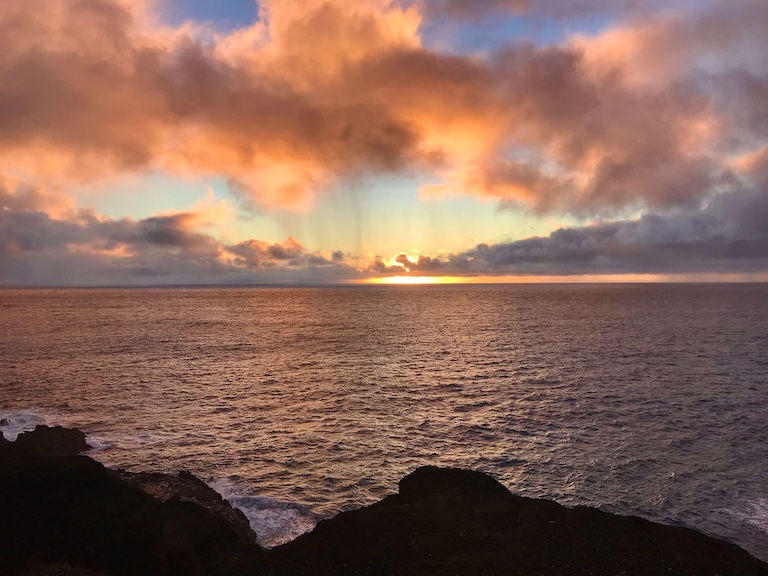

Maui (Moana) the Navigator
Speaking of Moana, you may be familiar with Maui from the Disney movie. He was a real person and a legendary Polynesian Navigator. Those stories he sang about in the film are all real stories of his larger-than-life deeds, told throughout the Pacific:
- Slowed down the sun for summer.
- Fished up several of the islands.
- Brought fire to the people.
- Yes, he really could shapeshift.
Hawaii Loa: Voyaging Ancestor
Our islands are named after the person who found them, a brave explorer and expert star reader. After discovering them, he sailed back home to bring his family. From him and other families who arrived similarly, the Hawaiian people eventually rose.
- Many scholars believe the first arrivals were from the Marquesas Islands.
- Chief Pao and others from Tahiti brought the Kapu System.
Pele: Fire and the Formation of Hawaii
Another famous islander is Pele, the Volcano Goddess. She was also a navigator, fleeing her homeland with her family and searching for fire. She started in the northwest and eventually made her home in Kilauea.
When she arrived, the Halemaumau Crater already had a resident. Pele’s legendary status made the rival step aside.
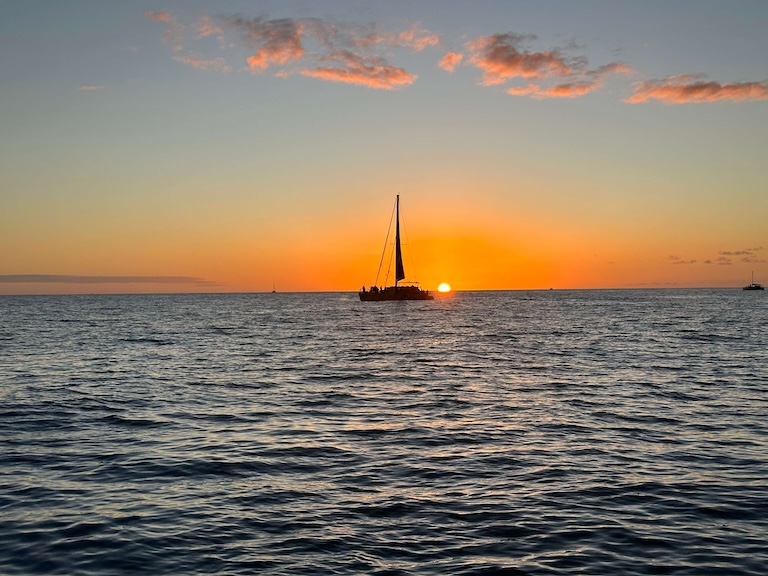
Since then, Manokalanipo, Kukailimoku, Mailikukahi, and other great Chiefs oversaw islands that thrived for a thousand (or so) generations. Ingenious innovations in land management and food supply led to peace and plenty.
Hundreds, if not thousands, of fishponds dotted the coastlines, and food could be found for literal miles.
But just like everywhere else, not all Chiefs were peaceful. The warfare eventually led to the unification of the islands into the Hawaiian Kingdom.

First Western Eyes: Spanish Sailors and Early Maps
The history books often credit Cook, but he wasn’t the first European here. The Spanish had been moving gold across the Pacific for centuries before his arrival. While they didn’t normally pass through Hawaii, ships drift, storms happen, and stories stick.
- Accounts of Spanish castaways ending up in the islands.
- Chiefs adopting them, possibly explaining the reddish “ehu” hair in some chiefly lines.
- 1555: Juan Gaetano allegedly maps islands resembling Hawaii.
Captain Cook: A Turning Point
Captain Cook didn’t start Hawaii’s story, but his arrival in 1778 became a pivotal chapter. He sailed in search of the Northwest Passage. Some later accounts claim Hawaiians saw him as Lono, though many recognized he was simply a man with a damaged ship and an exhausted crew.
Key points from Cook’s visits:
- First lands at Waimea, Kauai.
- Later anchors at Kealakekua Bay, Hawaii Island.
- Misread claims about being treated as Lono.
- Hawaiians read rank and behavior quickly.
After Cook, Hawaii appeared consistently on Western maps and in journals, opening the door to sailors, traders, and missionaries.
Kaiana: The Voyager of Mystery
By this time, long-distance voyaging had been on pause for centuries. Once foreign ships arrived, Hawaiians didn’t wait long to cross oceans again. The first chief to go was Kaiana, and his trip influenced both Hawaii and the outside World. During his travels, he amassed “The Red Mouth Weapon” in preparation for what he knew would come upon his return. His story is featured in the Apple TV series Chief of War.
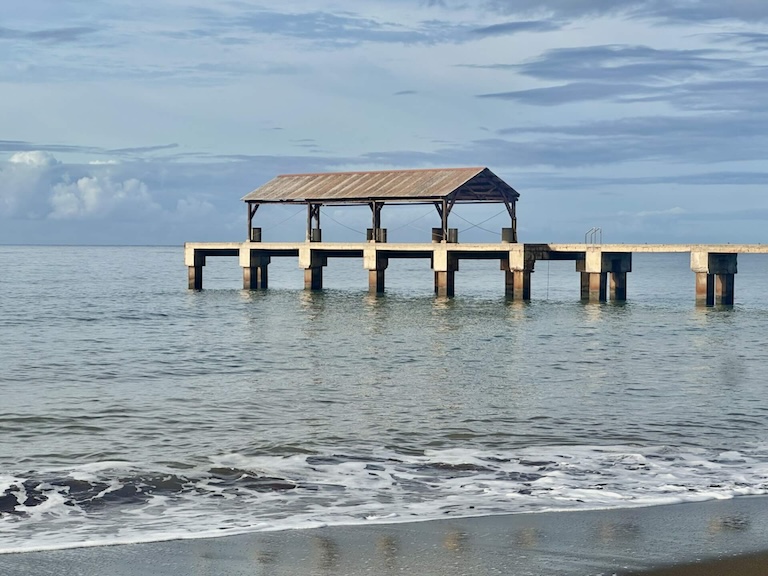
After Cook: Vancouver, Metcalf, and World Travel
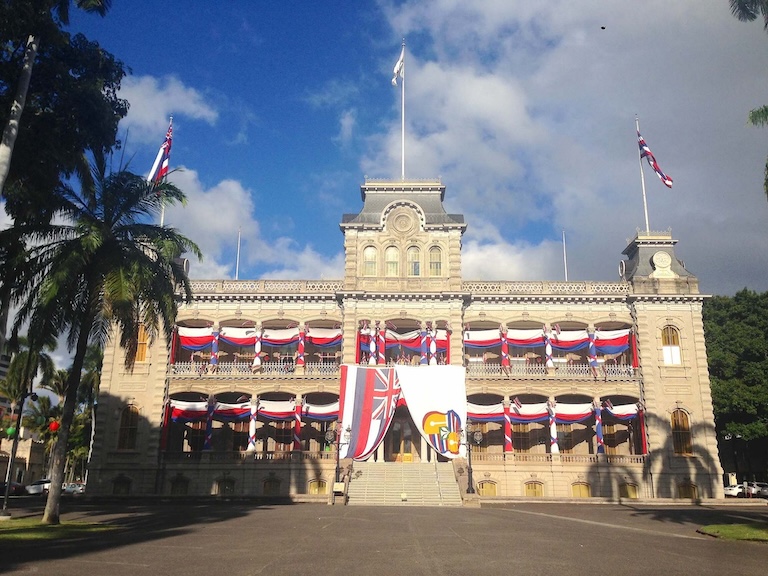
When you look at the Hawaiian flag, youʻll see itʻs relationship with the outside World, literally stitched into the fabric and design. The Hae Hawaii carries the British Union Symbol in part because of Kamehameha’s relationship with Vancouver.
Captain George Vancouver (1792–1794)
He gave Kamehameha a British flag, which was prominently displayed. Samuel Auld later designed the version that inspired today’s flag. Vancouver also introduced cattle, and Mexican vaqueros trained the first paniolo. Hawaii had working cowboys before the American West.
Simon Metcalf (1800s–1810s)
Metcalf is on the short list of outsiders who caused significant problems. Hawaii’s mosquitoes trace back to his ship. On the other hand, his ships brought two of Kamehameha’s key advisors, but the story behind that is messy.

Kamehameha and the Hawaiian Kingdom
There was a prophecy that stated a great Chief would rise under a star covered in a feather cape. Scholars place the birth of Kamehameha around the time of the appearance of Halleyʻs Comet. Through training, triumph, defeat, struggle, and clever strategy, eventually he would unite the Hawaiian Islands under one ruler and flag.
Why ships shifted to Honolulu:
As Western ships arrived regularly in the early 1800s, Honolulu’s deep, protected harbor proved superior to exposed landings elsewhere in the Kingdom.
- Safe, naturally sheltered anchorage.
- Easier loading/unloading than open-surf landings.
- Other landing spots often required wading or shuttling cargo by canoe.
- Waves could wipe out goods, trunks, and letters.
Merchants followed, then diplomats, then government buildings. By the mid-1800s, most political and economic activity had consolidated. Kamehameha III made it official in 1845, shortly after securing international recognition of the Hawaiian Kingdom.
George Richards Thompson / Thomas
Two British officers played key roles in reaffirming Hawaiian sovereignty. Lord Paulet seized control without authority. His superior, Captain Richard Thomas, sailed to Hawaii, ordered the British flag lowered, and restored Hae Hawaii. This moment is celebrated as La Hoihoi Ea, or Hawaiian Independence Day.

King Kalakaua: Circumnavigation and the Return
Kalakaua, the Merrie Monarch, was the first ruling Monarch of any nation to circle the globe. He met world leaders, studied railroads, navies, and governance to strengthen the Kingdom, and oversaw large-scale immigration to support the sugar industry. Most importantly, he pushed for cultural revival: language, hula, astronomy, and even lua, the traditional martial art. His nephew trained in it.
Queens in Transit: Hawaiian Women Abroad
It wasn’t just the Kings who traveled. The first Hawaiian to leave these islands after contact with the outside World was a woman named Wainee. Queen Kapiolani and Princess (later Queen) Liliuokalani traveled across two oceans to attend Queen Victoria‘s Jubilee Ceremony.
Beforehand, they conversed like old friends. Likely because the British Monarch had also met Queen Emma on her travels to England, and they maintained correspondence until her passing a few years later.
Freedom, Arrival, and Hawaii as a Crossroads
During the Hawaiian Kingdom era, anyone who made it to these shores was immediately free. No exceptions. Stepping onto Hawaiian soil didn’t just free someone from slavery; it also marked the beginning of a new life. Along with a real shot at social or business advancement.
This spirit is exemplified in the Law of the Splintered Paddle, which ensures safety, dignity, and the right to live without fear. Because of these values, Hawaii naturally became a crossroads: first canoes, then ships, later steamers and planes.
Immigration during the Kingdom era supported labor on sugar and pineapple plantations, and each group contributed to local culture.
Events that shaped Hawaii into what it is now:
Even today, almost every visitor reports the same feeling: the second they step off the plane, a calm hits them. Like the soft break of waves in Waikiki, greeting travelers for generations.
- Hawaiian law protected the vulnerable and emphasized basic human dignity.
- Immigrants’ cultures left a deep imprint on the islands.
- Hawaii’s central Pacific location made it a natural meeting place.
From Beachboys to the Birth of Hawaii Tourism
Hawaii’s tourism industry began with the sea. Upon arrival, beach boys cared for visitors, handling all things ocean and eventually guiding trips from Waikiki to explore the islands. Their respect among locals remains evident today.

Steamships & 19th-Century Pacific Travel
Crossing the Pacific by canoe or European sailing ship took months. But steamships cut the voyage to days. They required larger harbors, boosting Honolulu and nearby Chinatown.
Key points about steamship travel:
- Travel time reduced from months to days.
- Larger harbors enabled the growth of Honolulu and Chinatown.
- Tickets were expensive, limiting access to wealthier travelers.
- Accommodations varied in quality.
- Visitor numbers were naturally capped; passengers often prioritized luxury over nature.
- The slower pace and high cost made steamship travel very different from today’s mass tourism.

Early Aviation Arrival: 1930s–1950s
Air travel soon brought more luxury travelers, especially from California. Along with this, Hollywood promoted a Pacific paradise, idealizing Hawaii for wealthy Western elites. Along with word of mouth from service members who had passed through, this fueled another visitor boom.

Statehood and the Age of the Jetplane
After the two-option vote on statehood, Americans saw Hawaii as safe and exciting. The jet age lowered ticket prices, creating the middle-class traveler. Package deals and mass tourism followed. This generation had already seen Hawaii in films and was about to see it on television, in full color. Another wave of mass immigration arrived from the West.

Modern Wayfinding: Hokulea & the Revival of Ancient Knowledge
At the height of tiki bar and Hawaii Five-0 popularity worldwide, an ancient art form was being reborn. Thanks to one man from a tiny Pacific island, the Hokulea successfully traced Pacific origins and revitalized Oceania. About 50 years later, this traditional canoe sailed around the globe using only natural signs.
Jet Age to Present: Hawaii Opens to the World (1970s–Today)
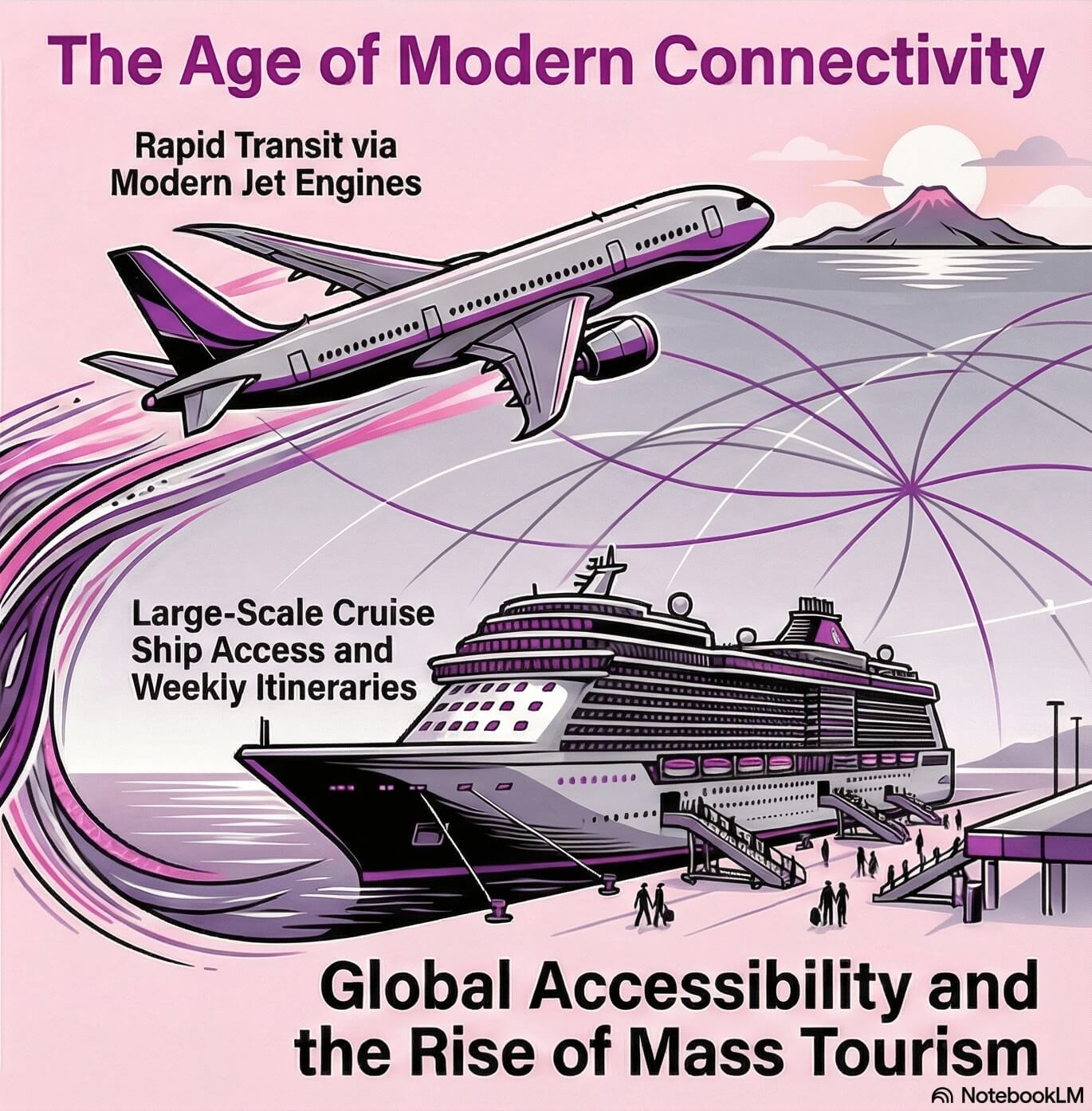
Now it takes roughly six hours from the U.S. and ten from Asia. Even a cruise ship can reach Hawaii in less than a week, bringing tens of thousands of people daily. The largest islands each have international airports and harbors large enough for floating cities. But beyond those upgrades, much of the infrastructure remains essentially the same as when the first jet landed.
From Ocean to Air Travel: How People Reach Hawaii
Hawaii has been the crossroads of the Pacific every since itʻs original discovery. Over thousands of years, demigods, navigators, Kings, Queens, and everyday people like Wainee arrived by wind, waves, and ingenuity. Further shaping the islands’ culture, laws, and communities.
Cruise vs. Flight: Which Is Better for You?
Flying is the choice for most, cheaper, faster, and flexible, though it requires planning once you arrive. Cruises offer an immersive, all-in-one experience with dining, entertainment, and onboard amenities, including casinos for international waters.
For the best of both worlds, the Norwegian Pride of America combines multiple-island itineraries with minimal sea days, perfect for first-time cruisers or those seeking variety.
| Attribute | Polynesian | European | Steamship | Early Aviation | Modern |
|---|---|---|---|---|---|
| Obstacles | Ocean survival | Storms and disease | Cost and danger | Exclusivity | Planning and logistics |
| Sustainability | ✓ Intuitive and renewable | ✘ Environmentally devastating | ✘ Coal-intensive | ✘ Fuel-intensive | ✘ Fuel-intensive |
| Speed | ✓ Fast for its era | ✘ Slow | Moderate | ✓ Fast | ✓ Fastest |
| Price | ✓ Courage-based | ✘ Coerced | ✘ Expensive | ✘ Pricey | ✓ Affordable |
| Comfort | ✓ Clean and purposeful | ✘ Basic | ✘ Rough | ✓ Luxurious | ✓ Comfortable |
| Reliability | ✓ Highly reliable | ✘ Unreliable | Moderate | Limited | ✓ Reliable |
Discover Hawaii Like a Local with Personalized Tours
No matter how you travel to Hawaii, we guide you through Oahu’s history, culture, and natural wonders. All grounded in local knowledge, tradition, and immersive experiences.

With Your Private Tours, we simplify planning, offer curated adventures, and handle pickup from hotels, piers, or the airport, even with luggage. Fully private, fully custom, and fully legal, we connect the islands’ rich past to your modern journey.
From Polynesian navigators to today’s travelers, Hawaii has always welcomed explorers. Just as the stars guided the first wayfinders, we’d be honored to guide you to Hawaii’s natural wonders.